
What vision changes are normal with age?
Aging commonly changes how the eyes focus, adapt to light, and perceive contrast. Some changes are expected, such as needing more light to read, while others may signal an eye disease that needs timely evaluation.
The most familiar age-related change is presbyopia, the gradual loss of near-focusing ability. It often becomes noticeable after age 40 or 45. Reading a menu, threading a needle, checking a phone, or seeing medication labels may require holding objects farther away or using reading glasses.
The eye’s natural lens becomes less flexible over time, making it harder to shift focus between nearby and distant objects. Presbyopia is a normal aging process, but it does not explain every change in vision.
Older adults may also notice:
- More sensitivity to glare from headlights, polished floors, or bright outdoor surfaces
- Slower adjustment when moving from sunlight into a dim room
- Reduced contrast, making gray lettering or low-contrast steps harder to see
- Drier, more irritated eyes
- A gradual need for brighter, more evenly distributed indoor lighting
- Difficulty seeing clearly at night
These changes can affect reading, cooking, driving, walking on uneven surfaces, and using stairs. They may be more noticeable in homes with dim hallways, reflective flooring, or strong sunlight entering through uncovered windows.
Which eye conditions become more common later in life?
Several eye diseases become more likely with age, and some may develop without obvious symptoms in their early stages.
Cataracts occur when the eye’s normally clear lens becomes cloudy. Common signs include blurred or hazy vision, faded colors, glare, halos around lights, increased difficulty driving at night, or needing brighter light for close work. Cataracts often develop gradually and are treatable when they begin interfering with everyday activities.
Glaucoma damages the optic nerve, which carries visual information from the eye to the brain. Most forms develop slowly and may not cause pain or noticeable changes at first. Peripheral vision can be affected before central vision, so a person may not realize anything is wrong. Age, family history, and certain health conditions can increase risk.
Age-related macular degeneration, often called AMD, affects the macula, the part of the retina responsible for sharp central vision. Early symptoms may be subtle. Straight lines may appear wavy, printed words may seem distorted, or a blurry or blank spot may develop near the center of vision. AMD usually affects central vision rather than side vision.
Diabetic eye disease can damage retinal blood vessels. People with diabetes may have no symptoms until damage has progressed, which is why regular eye monitoring is important even when vision seems stable. Blood sugar, blood pressure, and cholesterol management also influence eye health.
These conditions are different from ordinary presbyopia. Reading glasses may improve near focus, but they do not prevent or treat glaucoma, macular degeneration, or diabetic retinopathy.
Does aging automatically mean losing vision?
No. Vision loss is not an unavoidable part of growing older. Many age-related problems can be corrected, treated, slowed, or monitored before they cause major disruption.
A routine vision check can identify changes in glasses prescription as well as signs of cataracts, glaucoma, retinal disease, diabetic eye disease, and other conditions. Some eye diseases are easier to manage when found before symptoms become obvious.
A comprehensive eye examination may include evaluation of:
- Distance and near vision
- Eye pressure and optic nerve health
- Peripheral vision
- The retina and macula
- Eye coordination and focusing
- Dry-eye symptoms
- Changes related to diabetes, medications, or other health conditions
The appropriate examination schedule depends on age, medical history, family history, medications, and previous eye findings. People with diabetes, a history of eye disease, or a strong family history may need more frequent monitoring.
What can Alhambra residents do to protect vision?
Daily habits cannot eliminate every age-related eye condition, but they can reduce avoidable risk and support overall health.
Protective steps include:
- Wear sunglasses that block ultraviolet light when outdoors, along with a hat when practical.
- Avoid smoking and secondhand smoke.
- Keep diabetes, blood pressure, and cholesterol under control.
- Eat a varied diet that includes leafy greens, colorful produce, fish, and other nutrient-rich foods.
- Use adequate lighting for reading, cooking, medication management, and stairways.
- Reduce glare by adjusting blinds, curtains, or task lighting rather than relying on a single bright overhead fixture.
- Use protective eyewear during home repairs, gardening, cleaning, or other activities that can create flying particles.
- Keep eyeglass prescriptions current.
- Take breaks during prolonged screen use and blink regularly if the eyes feel dry.
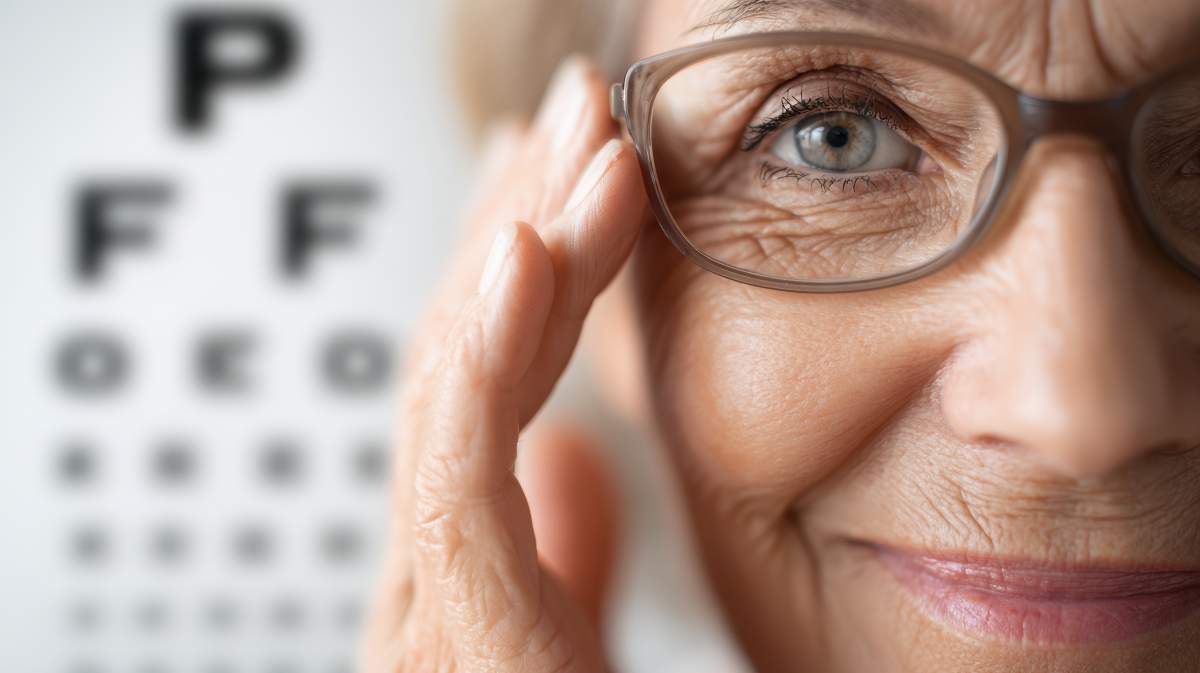
In a sunny, built-up community, reflected light from pavement, windows, and vehicles can make glare especially noticeable. Sunglasses and thoughtful indoor lighting can make outdoor errands and household tasks more comfortable, particularly for people with cataracts or reduced contrast sensitivity.
When should a vision change be treated as urgent?
Sudden changes should not be assumed to be normal aging. Prompt medical evaluation is warranted for:
- A sudden loss of vision in one or both eyes
- New flashes of light or a sudden increase in floaters
- A dark curtain or shadow moving across the visual field
- Sudden double vision
- A painful, red eye with blurred vision
- New distortion, such as straight lines appearing wavy
- Sudden weakness, facial drooping, confusion, or trouble speaking along with vision changes
These symptoms can be associated with retinal problems, acute eye conditions, or a neurological emergency. Rapid assessment may protect sight or, in some cases, indicate the need for emergency care.
How can older adults make everyday tasks safer?
Small environmental changes can compensate for reduced contrast, glare sensitivity, or slower adaptation to darkness.
Use brighter task lighting for reading and food preparation, but position lamps so the bulb does not shine directly into the eyes. Add contrast between objects and their backgrounds—for example, using a dark cutting board for light-colored food or marking the edge of a step with a contrasting strip.
Keep walkways free of clutter, especially in dim areas. Night-lights can help with trips to the bathroom, and handrails are useful where vision and balance are both less reliable. Medication labels may be easier to read with larger print, magnification, or improved lighting.
Vision changes deserve attention even when they develop slowly. The goal is not simply to find a stronger pair of glasses, but to distinguish normal focusing changes from conditions that can affect independence, mobility, and long-term sight.